
July 23, 2019
Ten facts from Riohacha that will amaze you
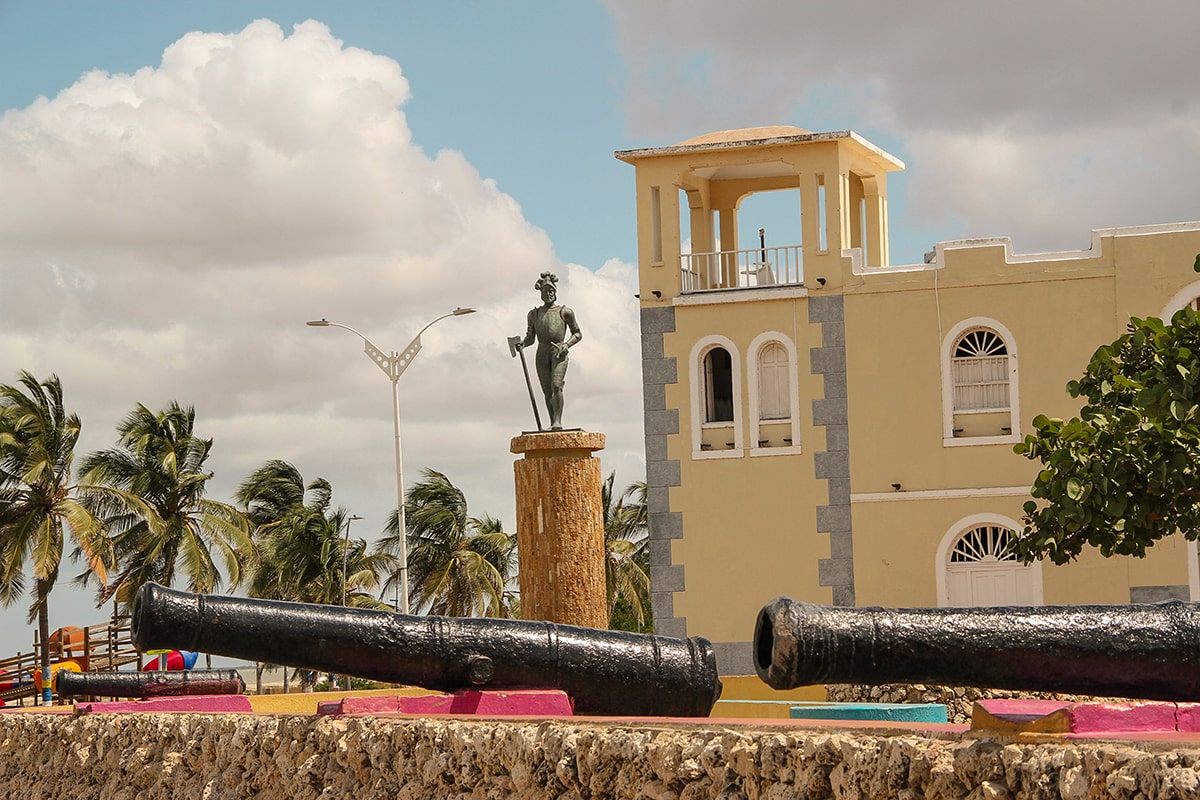
Riohacha is one of the oldest post-Colombian cities in Colombia and America, being founded in 1545. Its name is the combination of river (río) and ax (hacha), so in English could be understood as «Axriver». The origin of its name has not been clearly disclosed, but three theories exists: the first, reports the rescue and guidance of a thirsty and lost Spanish platoon by a native in a river, to which the commander, as a sign of gratitude, gives him an ax; the second makes reference to the loss of an ax by the same platoon commander in the river; and the third tells the story of an ax buried next to a river, which is discovered by a platoon of European explorers.
Considered a naval hero in Colombia and Venezuela, Padilla is known for his role as leader of the loyal forces of Great Colombia in the Battle of Lake Maracaibo, a fight that left the Spanish colonial forces heavily defeated. He was born in 1784 in Riohacha, son of Wayuu mother and Afro-descendant father. Having been linked to a conspiracy against Simón Bolívar, he was executed by a firing squad, this accusation, however, still generates controversy to this day. His remains rest in a pantheon inside the Nuestra Señora de Los Remedios Cathedral.
The present capital of the department was the target of looting by pirates and indigenous contingents. That was the reason the Indias council ordered the construction of a fortress to defend the city. Almost nothing of it exists today, only the cannons pointing right at the sea, located on a side of the Nicolás de Federman park —known also as the Cannons park—, outside the Capuchins Convent.
A tempest lashed Riohacha on May 14, 1663, destroying the first two streets next to the beach. Turbulent waters threatened to continue its chain of devastation, but the natives appealed to their faith and to their holy patron, the Vírgen de Los Remedios, organizing a procession with its image by the beach. Legend has it that when the procession reached the seashore, a strong flow of wind stripped the image of its crown throwing it into the sea, which mollified the storm and returning the city to calmness.
The first temple built in Riohacha was made of straw and bahareque. The present cathedral started to be built in 1835, being inaugurated fifteen years later. It stands out due to its architecture influenced by the barroque style. It was declared a national monument in 1948. The Virgin day is celebrated every February 2, with the cathedral being the epicenter of the celebration.
Between the seashore and La Marina Avenue, there is the city promenade, known as Malecón, a site meant to be toured on foot to contemplate the monuments and sculptures that represent the ethnic diversity of La Guajira, one of the country’s most varied. Besides the wayuu people, the department is also the home of other ethnic groups like wiwa, kogui, arhuaco, and kankuamo people. It is also possible to contemplate the sea, who has the custom of dressing many colors at once.
Nicknamed by some as “South America first Avenue”, La Marina, also known as La Primera “the first one”, it extends from the Department Cultural Center —where the Students Avenue ends—, passes for the bridge over the Ranchería river mouth, until the Villa Fátima neighborhood entrance. While marching the avenue, a string of artisan works autochthonous of the region can be appreciated, as well as representative monuments at the promenade.
To this day, Riohacha is the official capital of La Guajira department, one of the thirty-two the country has, as it is established in the 1991 National Constitution. However, in the past, La Guajira did not exist as a department. Since the end of the Spanish rule in what it’s today Colombia until the inception of the Republic of New Granada, Riohacha was a province that encompassed the present territory La Guajira has today. With the creation of the Granadine Confederation and, then, the United States of Colombia, the province was merged into the Sovereign State of Magdalena, constituted of the lands that today form the departments of Cesar, Magdalena and La Guajira, as well as portions of the Venezuelan Guajira. During this federalist period, the city was part of the Padilla Province, one of the subdivisions of Magdalena. Before the arrival of the twentieth century, the city became part of La Guajira Intendance, which was later converted into a Commissariat. In 1965 was created La Guajira department, its current status.
Located in what is today Almirante Padilla Hotel, it used to stand the Dugand Bank, one of the first banks in the Colombian Caribbean coast, with its peak during the nineteenth century. During its five years of existence, the bank printed bills, as it was fully backed by the epoch laws.
One of the most appreciated festivities by the Riohacha people, that according to some historians could be older than the well-known Barranquilla carnival. Two pairs of centuries ago the city already had its celebration: The sarabands. During this festivity, fights between indigenous and Spanish were recreated and, of course, there was a lot of dance. The current festivity involves the election of a “carnival queen”, as well as the embarradores (men and women covered in mud), who parade through the city streets to the sound of the pilón guajiro, a traditional musical piece regarding the carnival.
Sources
Aquí puedes preguntar por los licores artesanales, hechos desde La Guajira colombiana. 🌵


